Top 10 Do’s and Don’ts When You’re Applying For a Loan. (Mortgage)


Fives do’s: 
1. Make loan and other debt payments on time, especially over the months leading up to the filing of your mortgage application. Every 30-, 60- or 90-day delinquency on a loan or credit card is going to reduce the credit score the lender ends up considering as part of the loan file. That score, in turn, will determine how good a loan you get — if you get one at all.
2. If something has to be missed, miss the credit card payment first, followed by the payment on any installment loan you might have and finally, the payment for an existing mortgage. That’s because credit scoring systems look at the performance of similar loans first when deciding what type of score to assign.
3. Consider paying off more debt and putting down a smaller amount at closing. The move leaves borrowers with larger mortgages, but it will allow them to replace non tax-deductible, high-interest rate debt with lower-rate mortgage debt that features deductible interest.
4. Get the mortgage first if multiple financial obligations are going to pop up in the near future. Numerous credit inquiries, such as new applications for credit cards, can hurt a borrower’s credit score, especially if they’re filed in the months prior to the home loan review process.
5. Increase the size of the down payment you’re able to make by saving as much as possible, as often as possible. Evaluate money market or other accounts that offer reasonable rates of return, automatic payroll deductions or other financial incentives to save.

Five don’ts:
1. Don’t make any big purchases over the next couple of months. It makes less money available for the down payment and it might require you to get yet another loan.
2. Lenders consider what’s known in the industry as “payment shock” when approving loans. Somebody who goes from a relatively small monthly housing payment to a huge one either won’t qualify for a mortgage or will end up having to cover too much loan with too little money.
3. Don’t just get pre-qualified for a mortgage, get pre-approved. Home buyers must allow their lenders to pull credit reports, check debt-to-income ratios and perform other underwriting steps. But that puts a borrower much closer to obtaining a loan and locking in a rate and term.
4. Don’t forget what kind of money personality you have when getting a mortgage. By taking out a 30-year fixed rate loan rather than a 15-year mortgage and investing the money saved on monthly payments, you might earn a higher return on your money in the long run.
5. Don’t forget that homeownership brings with it many burdens. The cost of defaulting on a loan is much greater than the penalty of missing a rent payment.

First things to do after buying a new home!


You closed on your new property. The boxes are off of the moving truck, the furniture is in the right rooms and you are wondering what to do first. Here is a checklist of important tasks that are high priority.

1. Test the smoke and carbon monoxide detectors. Install new alarms or change the batteries if necessary.
2. Establish an escape plan and safe meeting place with your family in the event of a fire.
3. Make sure you know where the main water, gas and electrical shutoff valves are, in case of an emergency such as a burst pipe or gas leak.
4. Determine which outlets serve which circuits and then label the breakers.
5. Change the alarm system code, garage code, and any other password-sensitive devices.
6. Change all of the locks and make a few sets of spare keys.
7. Update your car insurance, driver’s license and voter registration to reflect your change of address.
8. Have all your mail and magazine subscriptions forwarded to your new address. Keep a close eye on your bank accounts and credit cards, because during a move you are especially susceptible to identity theft if mail is not delivered to your current address.
9. Unpack any and all medication that may be needed. Also, make sure you have a first aid kit readily available and a fire extinguisher in the kitchen pantry.
10. Add any child locks that are necessary, on toilets, kitchen appliances, medicine cabinets, and any doors that lead outside. Do not forget to place child safety gates and safety plugs in outlets if you have small children.

Why you should plan multiple visits to a home before buying!


For most of us, a home is usually the largest single investment of a lifetime. Such a large purchase warrants multiple visits before making a purchase and it is recommended that you stagger the times of these visits to get a comprehensive experience of the property. Here are some things to pay attention to when viewing a property.

 1. Wall-to-wall windows coupled with an open floor plan may seem picturesque midday. Schedule a visit at sunset to get an idea of how light floods through the home and think about how you would ensure privacy at night. It still may be an ideal choice but it is wise to get a realistic view and calculate the cost of window treatments.
2. Visit or drive by a prospective home at different times of the day. That seemingly quiet residential street may be a noisy, highway-feeder street during morning or evening rush hour. The same may be true for the morning commute but if you only visited the property midday, you would have no idea.
3. The adjacent school may seem like a nice perk, but during school hours, the daily playground noise and extra traffic may be more than you bargained for. If you are viewing the home in the summer, ask your REALTOR® or even neighbors about what you can expect.
4. It may be nice to be within walking distance to bars and restaurants, but consider the amount of pedestrian traffic. Will late night foot traffic lead to noise or disorderly conduct? Also, remember you can always visit the local police department to get crime statistics of an area.

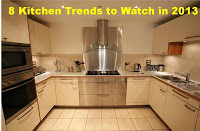
8 Kitchen Trends to watch in 2013!


Kitchens are a popular spot that home shoppers judge in a home. So what are the trends in the kitchen for 2013? HomeThangs.com, a home improvement superstore, offers up some of the following kitchen design predictions for the New Year:

1. Modern style: Kitchens are getting more modern in style, boasting simplified lines and offering up big, open spaces perfect for entertaining.

2. Tucked-away appliances: Appliances designed to blend in with the rest of the kitchen, like with the same wood of the cabinets, are becoming more popular. Also, some appliances, like under counter or mini refrigerators or trash compactors, are being tucked away into a kitchen island.

3. Lots of lights: Great lighting in the kitchen is becoming more important, with lighting being layered with a mixture of task lighting and ambient lighting. Under-cabinet LED lights are becoming more commonplace.

4. Super sized kitchen islands: “2013 kitchen design trends are moving away from dining rooms and toward eating, drinking, and interacting in the kitchen itself, and a large kitchen island complete with bar stools is the perfect way to make this happen,” according to HomeThangs.com. this helps to create “a nice open-air feeling – especially if one can be used to bridge kitchen and living areas, another major 2013 kitchen design trend.”

5. Neutral color schemes: The use of neutral colors in the kitchen is on the rise, particularly in shades of grays and greens and a variety of wood tones. Bright colors are being reserved for only small accents in the kitchen.

6. Fancy appliances: Professional gas ranges and induction cook tops are popular kitchen appliances for making a more gourmet kitchen.

7. Decorative range hoods: Trends are moving away from a conventional stainless steel trapezoid-shaped hood to more decorative range hoods. These hoods may have built-in LED lights and are even serving almost like a decorative chandelier for a kitchen island.

8. Glass back splashes: High gloss is “in” for cabinets, appliances, and back splashes. A single-sheet, back-painted glass black splash is growing in popularity, which are also known for being easy to clean. These glass back splashes are also reflective, adding a polished decorative touch to kitchens. Glass mosaic tile sheets are also increasing in popularity.

First things to do after buying a new home!


You closed on your new property. The boxes are off of the moving truck, the furniture is in the right rooms and you are wondering what to do first. Here is a checklist of important tasks that are high priority.
1. Test the smoke and carbon monoxide detectors. Install new alarms or change the batteries if necessary.
2. Establish an escape plan and safe meeting place with your family in the event of a fire.
3. Make sure you know where the main water, gas and electrical shutoff valves are, in case of an emergency such as a burst pipe or gas leak.
4. Determine which outlets serve which circuits and then label the breakers.
5. Change the alarm system code, garage code, and any other password-sensitive devices.
6. Change all of the locks and make a few sets of spare keys.
7. Update your car insurance, driver’s license and voter registration to reflect your change of address.
8. Have all your mail and magazine subscriptions forwarded to your new address. Keep a close eye on your bank accounts and credit cards, because during a move you are especially susceptible to identity theft if mail is not delivered to your current address.
9. Unpack any and all medication that may be needed. Also, make sure you have a first aid kit readily available and a fire extinguisher in the kitchen pantry.
10. Add any child locks that are necessary, on toilets, kitchen appliances, medicine cabinets, and any doors that lead outside. Do not forget to place child safety gates and safety plugs in outlets if you have small children.

Ways to save for a new home


A home is often the biggest investment most people will make in a lifetime. Saving for a down payment can be a lengthy and disciplined process. Taking advantage of federal tax incentives and low interest rates are great ways to reach your goal of owning a home. Here are some small ways that can really add up to big savings.

1. Make coffee at home instead of buying a daily brew. Prices on lattes, coffee and espresso have gone through the roof.
2. Eat at home instead of going out. When you dine out, consider lunch instead of dinner and avoid purchasing alcohol at meals.
3. Consider taking on a roommate or smaller apartment to cut down on rent.
4. Eliminate extras like premium cable, expensive DVD rental plans, and excessive cell phone plans.
5. Use coupons at the grocery store and look for sale items. Shop for groceries and household cleaners at retailers that offer major discounts on items sold in bulk.
6. Cancel your overpriced gym membership fee and work out on your own.
7. Program your thermostat so heat is lowered at night or during the day when occupants are not home. Turn off the lights when you leave a room and use fans instead of air conditioning to keep your electricity bill low.
8. Carpool to work, buy low octane fuel and avoid taking costly taxis.
9. Purchase generic medications and toiletries instead of brand names, often,the same active ingredients are used and the items are a lot less expensive.
10. Pack a sandwich and bring it to work. Work lunches and office take out can be a drain on your budget.

Open house etiquette for buyers


The purpose of prospective buyers viewing a home is to learn as much as possible about the property. Focus on the residence itself, not the current owner's furniture, decor, or items that do not pertain to the sale of the property. Follow these simple tips when walking through a home.

Be prepared to leave your shoes at the door. This is a frequent request of homeowners, especially when carpet and inclement weather is involved. Dress accordingly and acquiesce to any requests.


At an open house there may be a sign-in sheet. Sign in and let the Sales Professional know if you are already working with an agent.

Ask before taking any pictures or video, remember, this is someone's home and they are entitled to privacy.

Feel free to walk through a home, but please refrain from touching or moving any personal property.

Inspect linen closets, walk-in closets, laundry rooms and built-in cabinetry, but don't snoop. Measure cabinets, check for squeaky hinges, but avoid prying through personal effects.

Don't speak negatively about the property. Keep in mind that neighbors, friends, and even the homeowner may be present at an open house.

If you bring children, do not leave them unattended. Supervision ensures their safety and prevents any unintended damage to the property

Ask permission from the agent for use of the restroom

All questions should focus on the property, not the homeowners. Don't get distracted by family pictures or diplomas, remember the purpose of your visit is to learn more about the property itself.